
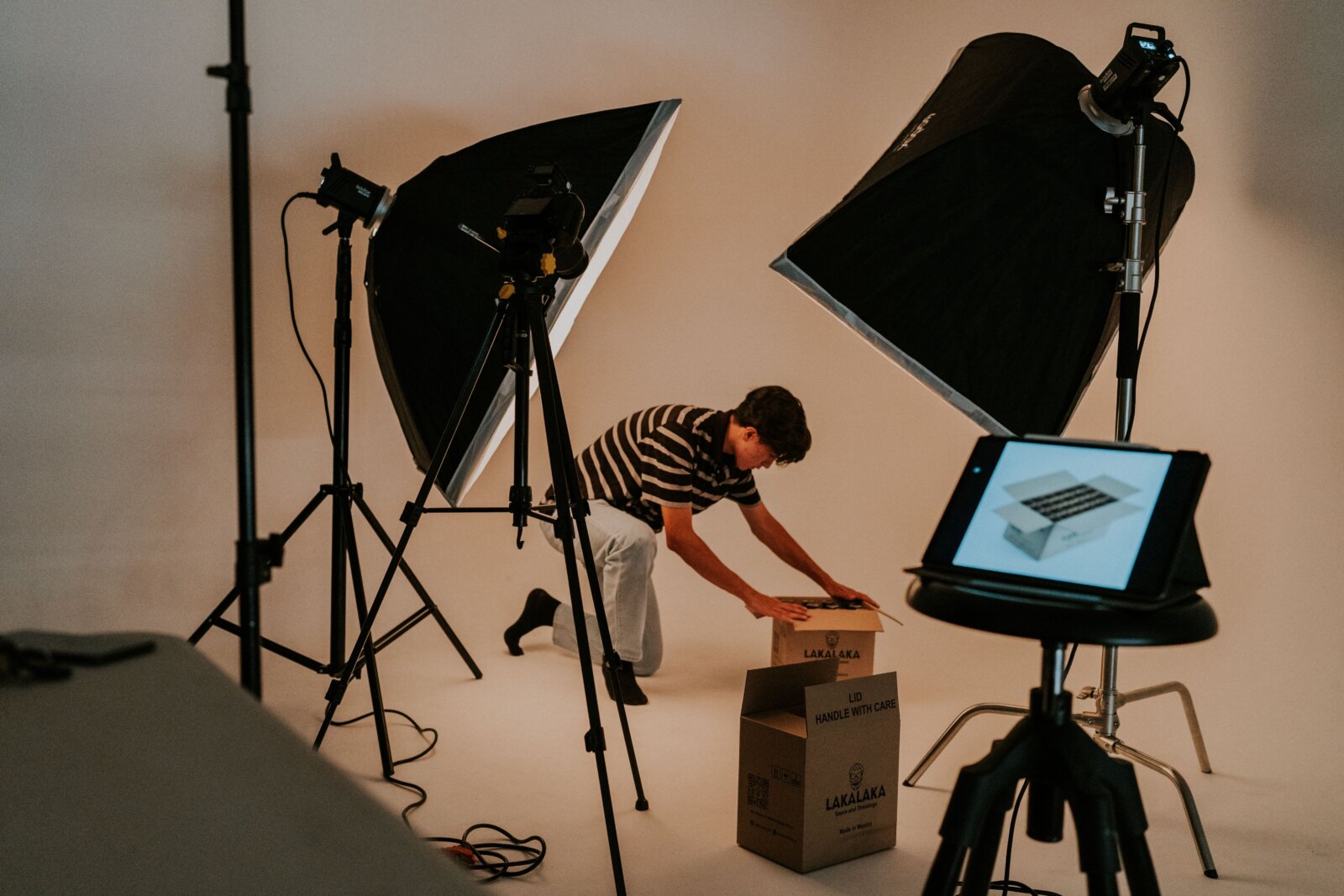
A ring light and a bedsheet will get you a photo. It will not get you a photo that matches the other eleven photos on your product page. That is the part nobody warns you about when they sell you the ring light.
I know because I did the bedsheet thing too, back before I had a studio and had to talk myself into paying rent on one. It works fine for a single hero shot. It falls apart the second you need fifty of them to look like the same person shot all fifty, on the same day.
Nobody Notices Good Lighting. Everyone Notices Bad Consistency.
A home lighting setup is rarely broken in any one photo. It breaks across twelve of them. Three have a warm cast, two have a shadow the others don’t, and one product sits four degrees off from its neighbors. A customer scrolling a catalog page does not think “the white balance is inconsistent.” They just think something is off, and they click over to a competitor’s listing instead.
A studio setup is not magic. It is every variable a camera or a light can touch, written down and locked in place. Light height, light distance, power level, ISO, aperture, white balance, camera position, product position. None of that is more talented than a windowsill and a phone. It is just repeatable, and repeatable is the entire game when you are shooting a catalog instead of one photo for your mom’s fridge.
Your Red Is Lying to You
Color accuracy is the fastest way a bad setup turns into a return shipment. A shirt that photographs three shades warmer than it actually is gets ordered by someone expecting the color in the photo. Not the color that shows up in the box. (Yes, this is a real reason people send things back. No, it is not the customer’s fault.)
Cheap bulbs render color unevenly, and fabric, metal, and printed packaging are exactly where that shows up first. A high color-rendering light source keeps a red looking like the red it actually is. A cheap one turns that same red slightly orange, because the bulb behind it has opinions about orange. This is not a vibe. It is measurable, which is why a studio buys lighting rated for it instead of whatever bulb was already screwed into the garage lamp.
Glossy Packaging Wants Less Light, Not More
Point one hard light source at a glass jar or a chrome bottle cap and you get a blown-out hot spot. Editing cannot fix that later, because the highlight is already gone the moment the shutter clicks. More light does not solve this. It makes it worse, the same confident way yelling louder at a Wi-Fi router does not make the internet faster.
The actual fix is diffusion. A softbox, a light tent, or a diffusion panel spreads that same light source across a wider area before it reaches the product. That softens the reflection instead of adding to it. A black card just out of frame quietly absorbs the stray highlight that would otherwise bounce straight back into a glossy surface. None of this happens in Photoshop. It has to happen at the light, before the photo exists.
The Boring Detail That Actually Saves You Money
Tethered shooting wires the camera straight to a monitor. Every frame shows up full-size the second it is captured. That is the difference between catching a smudge or a soft-focus shot immediately, and catching it three weeks later when the catalog is already live and someone in customer service is answering emails about it.
Checking a photo on a camera’s two-inch screen catches almost nothing. Checking it tethered, at full size, catches the mistake at the one moment it costs nothing to fix. That moment is before the next product goes in front of the lens. That is not a nice-to-have. That is the entire financial argument for a real setup, and it has nothing to do with how the light looks.
What This Actually Buys You
None of this is about making one product look impressive. It is about making fifty products look like they were shot by the same person, on the same day, to the same standard, because they were. That consistency is what a customer trusts before they have read a single word of your copy.
If your catalog comes from whatever setup was available that week, that inconsistency is already showing up. Whether you have caught it yet or not. Go look at your own product page right now. Compare five photos side by side. You already know which ones don’t match.
I shoot product photography exactly the way I just described. Documented lighting, tethered review, a setup built to repeat across an entire line instead of just one hero shot. If you’re planning a catalog shoot, tell me what you’re shooting, and I’ll tell you what it actually takes to make it look consistent. Take it for what it’s worth.