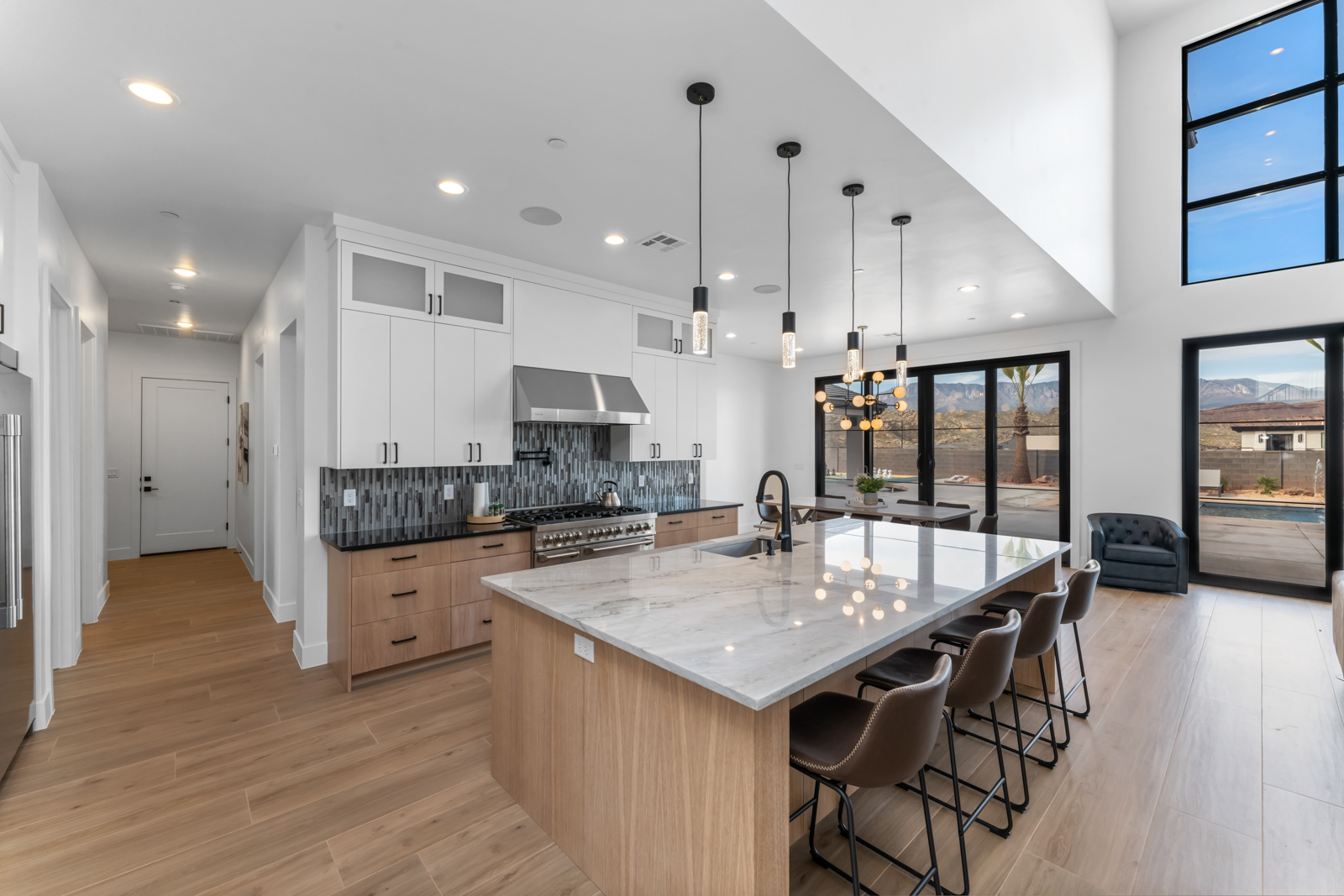

Every brand meeting I’ve ever sat in on goes the same way. The deck gets built first. The campaign gets approved first. The budget gets allocated first. Then, somewhere around week six, someone remembers photography exists. I get booked in like I’m renting a folding table for the company picnic.
I used to think that was just how it worked. For years I let it be how it worked. I showed up after the strategy was locked. I pointed a camera at whatever the deck already decided mattered. I called it “creative execution.” It wasn’t creative. It was set dressing for a decision that had already been made without a single real photo in the room.
The Deck Gets Written Before Anyone Knows What It Looks Like
Here’s the actual problem. A marketing team writes the whole campaign in language. Taglines. Positioning statements. A “brand voice” document nobody reads twice. None of it tells you what the product looks like in someone’s actual kitchen. None of it tells you whether your team photographs like a group of coworkers forced into a company softball game.
That gap gets discovered on shoot day, which is the single worst day to discover it. By then the invoices are signed and the deadline is already screaming. I’ve shown up to shoots where the “bold, energetic” brand turned out to be four people in beige cardigans standing in a beige office. Nobody planned for that. Nobody could have. Nobody looked at anything real before they wrote the adjectives.
I’ve also shown up to a “warm, family-owned” brand shoot where the actual workspace was a fluorescent-lit warehouse that felt like a DMV on a bad Tuesday. Same problem, different adjective. The words got picked in a conference room. The room they described existed nowhere near the actual building.
Visuals First Is a Sequence, Not a Slogan
Flip the order and the whole thing gets cheaper and faster, not more artistic. Shoot first, or at least scout and test-shoot first. Let the strategy get built around what actually exists. The real light in the real office. The real texture of the real product. The real energy of the real team on a normal Tuesday, not a highlight reel Tuesday. That’s not a mood board. That’s reconnaissance.
(I know “reconnaissance” sounds like I’m auditing a bank, not a bakery. Stick with me.)
Every client who did this backwards ended up reshooting something within the year. The photos never matched a strategy that got written blind. Every client who did it in the right order got a full year of usable assets out of one day. The strategy got written by someone who had actually looked at the thing first, which turns out to matter more than the size of the budget.
This is not a call for bigger budgets. It’s the opposite. A half-day of real photos before the strategy meeting is cheaper than one reshoot after a launch nobody can quietly walk back. I’ve watched a client spend more fixing a campaign built on stock-photo assumptions than they would have spent booking me three weeks earlier. The math never favors guessing.
Nobody Wants the Boring Answer
Nobody wants to hear it’s a sequencing problem. They want a secret weapon. A filter. A growth hack. Some raccoon-brained algorithm trick that gets them featured overnight while they sleep. The actual fix is scheduling the photography meeting before the strategy meeting instead of after it. That’s it. That’s the whole trick, and it has been the whole trick since before anyone started calling it “content.”
Go look at your last three campaign decks. Check the date the photography got booked against the date the strategy got approved. If photography lost that race by more than a week, that’s the whole problem. It’s sitting right there in your own calendar, and nobody has to admit anything out loud to see it.
Move the meeting. Book the shoot first. Write the deck around what the camera actually finds, not what a slide claimed was true before anyone checked. If you want to see what that looks like for your brand, let’s talk about the shoot before you write another deck around one.
Take it for what it’s worth.