
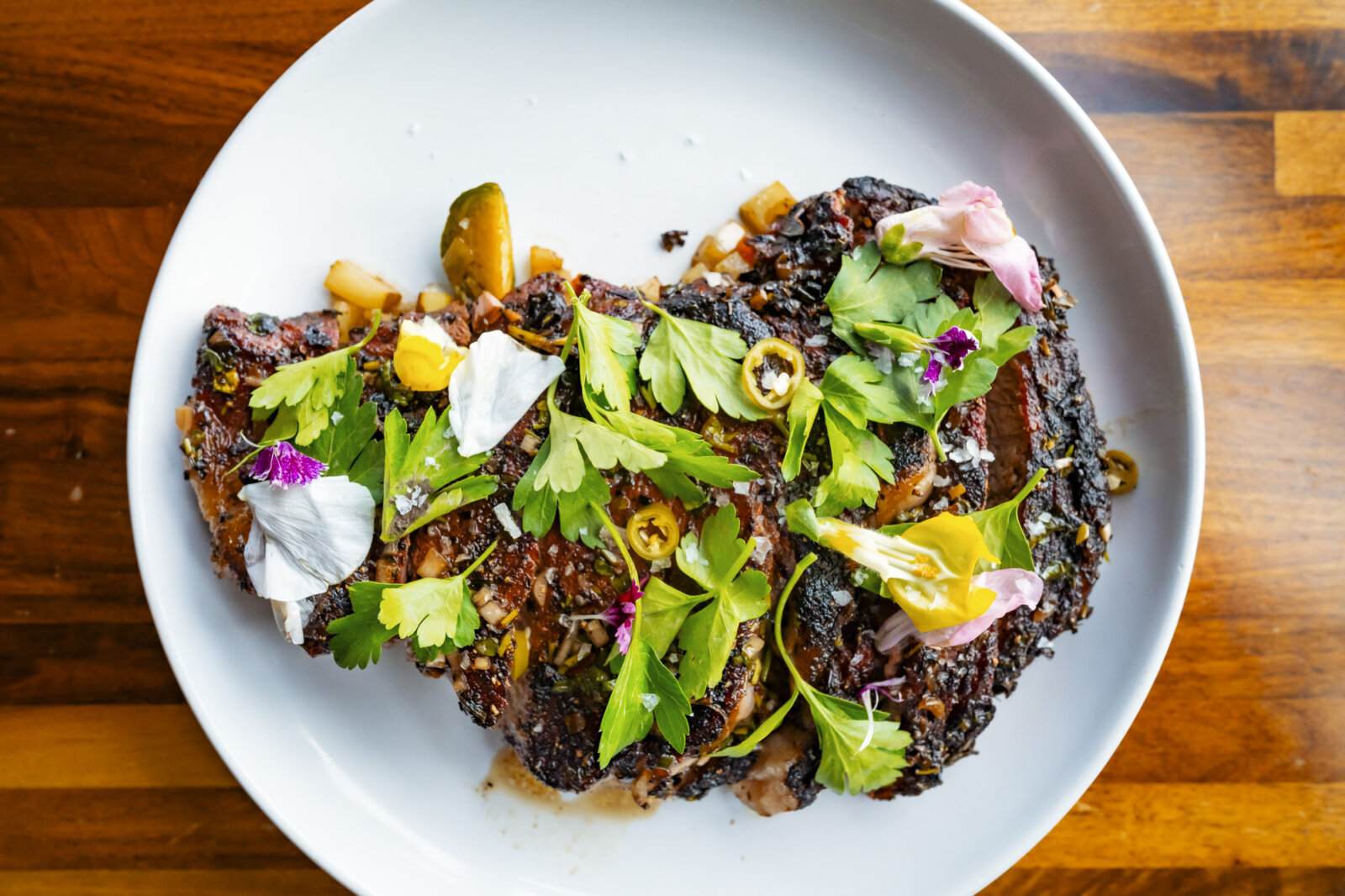
Anyone can point a camera at a plate. I did it for a friend’s food truck years ago. No consultation, no plan, I just showed up and shot whatever came out of the window. The photos were fine. Fine is the ceiling when nobody thought about the shot before the food hit the plate.
A professional food photographer is not there to make a burger look shiny. That part is the easy half. The real job starts before a single light turns on. Nobody outside the industry ever sees that part. That is exactly why people underrate it.
The Consultation Happens Before the Camera Does
A real shoot starts with a conversation about what the menu is actually trying to say. Rustic and homemade wants warm, uneven light and a wood surface with some honest wear on it. Sleek and modern wants clean negative space and a surface that reflects like it means it. Skip this step and you get technically correct photos that fight the restaurant’s own identity, the way a tuxedo fights a backyard barbecue.
I have shot menus where the owner wanted “elevated comfort food” and gave me nothing else. That is not a brief. That is a fortune cookie. The consultation is where a photographer drags a real direction out of a client. That happens before the food shows up and starts a clock nobody can stop.
The Clock Starts the Second the Plate Leaves the Kitchen
Food is not a still life. It is a live, decaying object with a shelf life measured in minutes. A professional plans the shoot around that fact instead of discovering it live. Nobody wants to learn it mid-shoot, with a chef watching the clock run out on their own dish.
Ice cream melts. Garnish wilts. Steam disappears the moment it would have looked best. A good photographer works with the chef to sequence the shots. Hero angle first, while the plate is perfect. Detail and texture shots second, while there is still something left to photograph. Get the order backward and you spend your best light on a garnish nobody will remember.
The kitchen relationship matters more than the lens does here. A chef who trusts the photographer will replate a dish without an ego bruise. A chef who doesn’t trust the photographer starts hovering, and now you’re shooting a stressed plate next to a stressed human. Both of them look it.
Editing Restraint Is the Skill Nobody Notices
The instinct with editing software is to push everything. More saturation, more contrast, more shine on the sauce until the dish looks dipped in shellac. That’s the fastest way to make a photo look fake. A diner can feel fake even when they can’t name what’s wrong with the picture. You know the one. The burger that looks like a rendering.
A professional edits toward what the dish looked like on its best day, not toward what a slider labeled “vibrance” can technically achieve. Real food has soft shadows and slightly uneven color. A photo that keeps some of that texture reads as something you’d actually want to eat. That’s the whole trick.
Nobody can explain why one menu photo makes them hungry and another makes them suspicious. The gap between the two is almost always restraint, applied by someone who knew when to stop clicking the same slider.
None of this needs exotic gear. It needs someone who did the consultation, respected the clock, and stopped editing before the food stopped looking like food. If your menu photos have never had any of those three things happen to them, fix that first. Spend the ad money after, not before. Tell me what’s on the menu and I’ll tell you what it actually needs.