
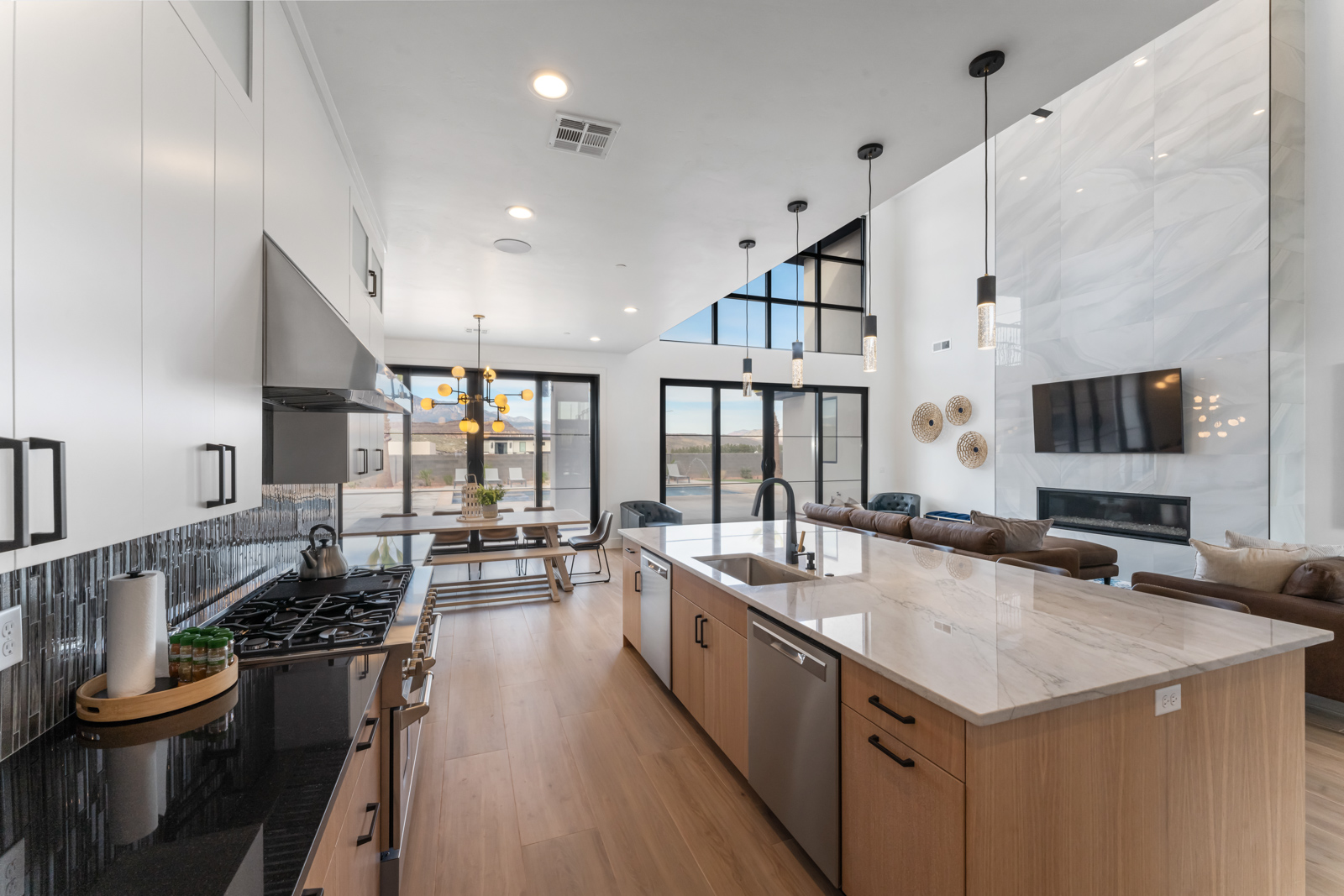
Every listing agent has hired the “cheap guy” once. You know the one. He shows up, points a camera at the living room, and cranks the HDR slider like it owes him money. The windows blow out white. The verticals lean like the house just survived a minor earthquake. He still sends an invoice with a straight face.
I have been that photographer’s competition more times than I can count. I show up two weeks late to clean up a listing that already burned its first impression online, already got scrolled past by every buyer who saw the crooked verticals and the blown-out windows and quietly assumed the house itself must be the problem. It was never the house.
So take this from someone who has watched good houses sit because of bad pictures, not from a listicle written by someone who has never had to explain to a seller why their showings dried up.
The Portfolio Test That Actually Works
Do not just scroll a gallery and admire the pretty kitchen. Look at the door frames. If they lean in toward the center of the shot, that is a wide lens used badly. It will show up in every room they shoot for you.
Check the windows next. A blown-out white rectangle where a view should be means nobody bracketed the exposure. A good real estate photographer treats a window like a second light source that needs its own attention. It is not an inconvenience to blow past and fix “in post.”
Ask to see one full listing gallery, not a highlight reel. Anyone can produce six good photos across a whole career and repost them everywhere. Twenty-five consistent photos from one job tells you what you will actually get.
What “Fast Turnaround” Actually Means
Every photographer says “fast turnaround.” The phrase means nothing on its own, and everyone selling it knows that. Ask for a specific number of hours, in writing. Ask what happens if they miss it on a busy weekend.
A real answer sounds specific: twenty-four to forty-eight hours, with a heads-up the moment that changes. A vague answer sounds like enthusiasm wearing a turnaround time as a costume.
The same test applies to drone work. If a photographer offers aerial shots, ask if they hold an FAA Part 107 certificate. This is not a technicality you can politely skip. Flying a drone commercially without one is illegal. If something goes wrong over a client’s property, you do not want to learn afterward that nobody was covered.
The Questions Worth Asking Before You Book
How many photos are included, and is that number firm or a starting point they pad later? What happens if the property is not ready when they arrive, blinds shut, lights off, clutter everywhere? A photographer with a real answer has been burned by that exact scenario once already.
Ask what license the photos come with. Marketing one listing is a different deal than a brokerage reusing the same photos in a national ad campaign a year later. Settle that before the shoot. Nobody wants that conversation happening after a lawyer gets involved.
Ask about the equipment too, but not the way most people ask it. Do not ask what camera they use. Ask what lens they use for interiors, and listen for whether they can explain why. Anyone can buy a full-frame camera body at Costco’s electronics counter and call themselves a real estate photographer by dinner. The lens, the lighting, and twenty years of knowing which corner of a room actually sells the space are the part nobody can buy off a shelf.
None of this requires hiring the most expensive photographer in Colorado Springs. It requires hiring someone who answers these questions without stalling. That is the whole test.
If you want a straight answer to any of these before you book, just ask me directly. I would rather field a blunt question up front than watch another listing sit online looking like a crime scene lit by a flashlight.