The fries are gray. The salmon looks like it gave up halfway through being salmon. The white plate has a faint green tint nobody in the kitchen can explain. A stranger scrolls past the photo on a delivery app in under a second, never knowing why. None of that is a food problem. It is a lighting problem, and it is the most boring, most fixable reason a menu photo undersells a dish that actually tastes great.
I know because I shot under a restaurant’s own dining room lights before I knew better. I watched a beautiful plate turn the color of a gas station hot dog on the back of my camera. I blamed the lens. It was never the lens.
Most restaurants shoot menu photos under the same lights they cook and serve under, because that light is already there. But “the light that’s already there” is doing a completely different job than the one you need. Dining room lighting exists to make a room feel warm and a plate look decent to someone walking by at eight feet. It was never built to survive a camera sensor twelve inches away.
Your Dining Room Lights Are Working Against You
Overhead fixtures throw hard, downward shadows that carve unflattering trenches into a plate. Warm bulbs push everything orange or yellow. That’s why so many delivery photos make fresh food look like it’s been sitting under a heat lamp since the Bush administration. A camera set to correct for one light source will overcorrect for every other one in the room. Most dining rooms mix two or three color temperatures at once, and nobody ever decided that on purpose.
The worst version of this is a table near a window in an otherwise warm room. Daylight hits one side of the plate cool. Tungsten bulbs hit the other side warm. There is no single white balance setting that fixes both, because you’re asking one number to referee an argument that was never going to end.
None of this is about the food. A perfectly plated dish still reads flat and faintly wrong under mixed light, and the guest scrolling past cannot tell you why.
They just don’t stop scrolling.
Three Things Actually Fix It, and None of Them Are a Studio
A real setup starts by taking the ambient room light out of the equation, or controlling it on purpose instead of shooting around it. From there, three things do almost all of the work. I say this as someone who used to believe you could “fix it in post.” You cannot. Not fully. Every photographer who tells you otherwise is lying to you or to themselves.
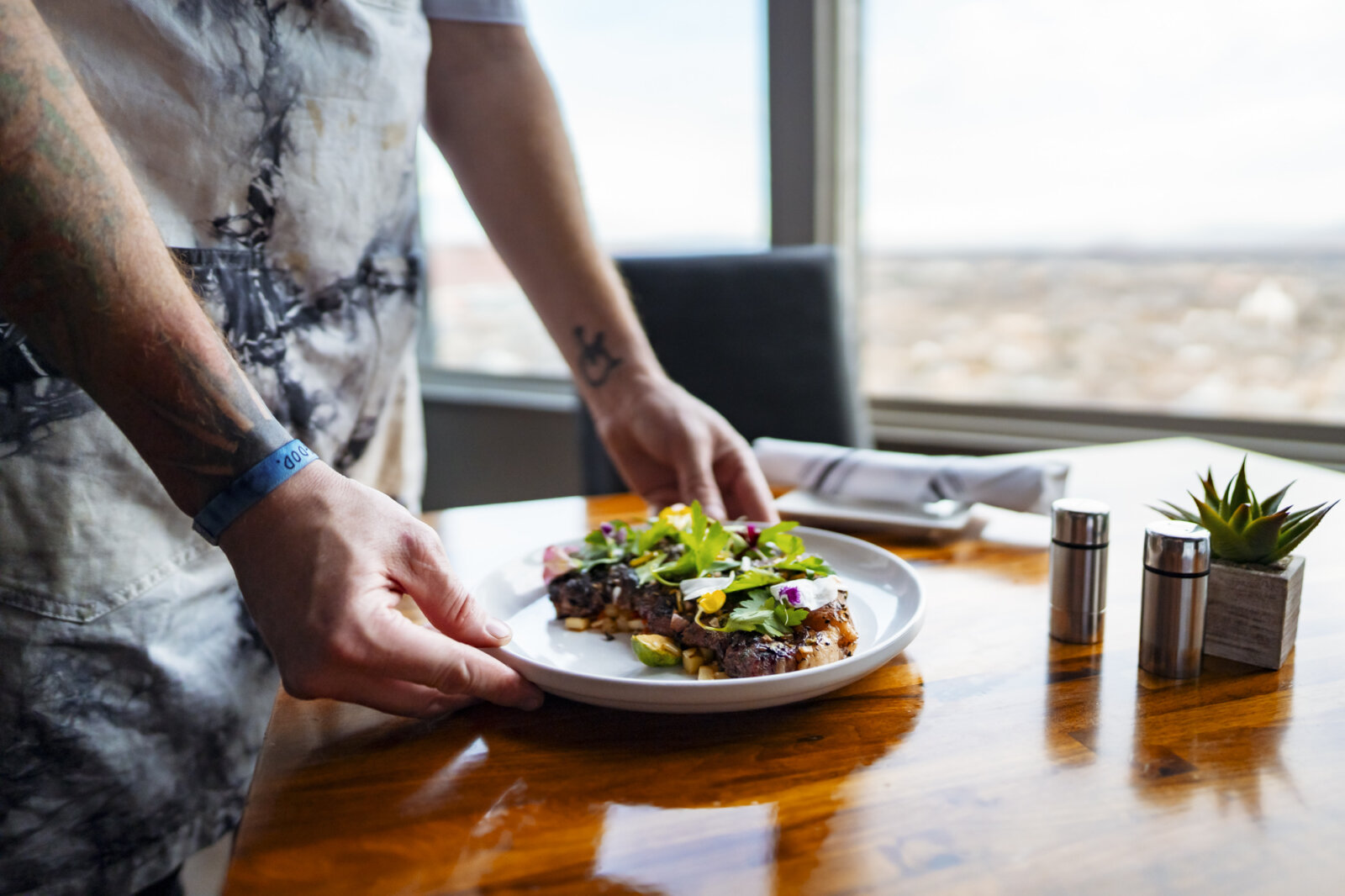
Diffusion first. Direct light hits anything glossy, meaning most sauces and glazes, and turns it into hard shadows and hot spots. A softbox or diffusion panel between the light and the plate spreads that light out. A shine reads as appetizing instead of looking like a reflection off a shower curtain.
Side or back light, never straight on. Light angled back toward the dish reveals texture. The flake in a piece of fish. The char on a crust. The steam, if you time it right. Light coming straight down flattens all of that into one dull tone. That flatness is the visual signature of a bad menu photo, even when the exposure meter says everything is fine.
One controlled color temperature, not three fighting ones. Use a single, color-accurate light source, with a reflector opposite it to fill the shadow without adding a second cast. That’s what lets a white plate stay white. A piece of salmon stays the color of salmon, instead of the color of whichever bulb happened to be closest.
None of this requires a studio, a crew, or a four-figure lighting kit. It requires deciding what the light is doing before the camera comes out. Not pointing a phone at a plate under whatever happens to be on.
This Is a Sales Problem Wearing a Technical Costume
A menu photo has one job: make someone choose a dish before they’ve tasted it. On a delivery platform, the photo is often the entire pitch. It’s the whole sales conversation compressed into a rectangle someone looks at for less than a second. A photo with the wrong color cast reads as less fresh than the identical dish shot correctly. That judgment happens before anyone reads a description or a price.
So no, this was never really about lighting theory. It’s about a kitchen doing good work. Then losing the sale in a rectangle, over and over, to a problem that has nothing to do with the food.
That’s the whole thing. The photo lied about the food before the food ever got a chance to speak for itself.
If you’re updating a menu, a delivery listing, or a full gallery this year, get the light right before you touch anything else. Styling a plate under bad light is like ironing a shirt you’re about to spill coffee on. Here’s what a real production day actually covers. I’m glad to walk through what your menu actually needs before we ever show up with a light stand.