For two years, my own headshot on LinkedIn was a cropped screenshot from a Zoom call. Taken at the exact second I looked like I’d just remembered I left the stove on. A client pointed it out. Not kindly.
Most business owners are walking around with some version of that photo right now. A decade-old LinkedIn shot. A cousin’s wedding, cropped down until you’re the only one left in frame, one shoulder still touching a stranger’s elbow. A selfie in bathroom lighting that makes everyone look faintly seasick. It’s the photo equivalent of showing up to a client meeting in the shirt you slept in. Nobody in that meeting is allowed to say anything about it.
LinkedIn’s own data says a profile photo gets you 21 times more views, 9 times more connection requests, and 36 times more messages. Compared to a blank gray silhouette. Everyone reads that number and checks the box that says “I have a photo.” Almost nobody asks the harder question. Is the photo actually doing anything, or just technically existing, the way a gym membership technically exists in your wallet.
A Phone Doesn’t Make the Decisions a Camera Session Does
I get it. A phone takes a fine picture of a face. That was never the actual problem.
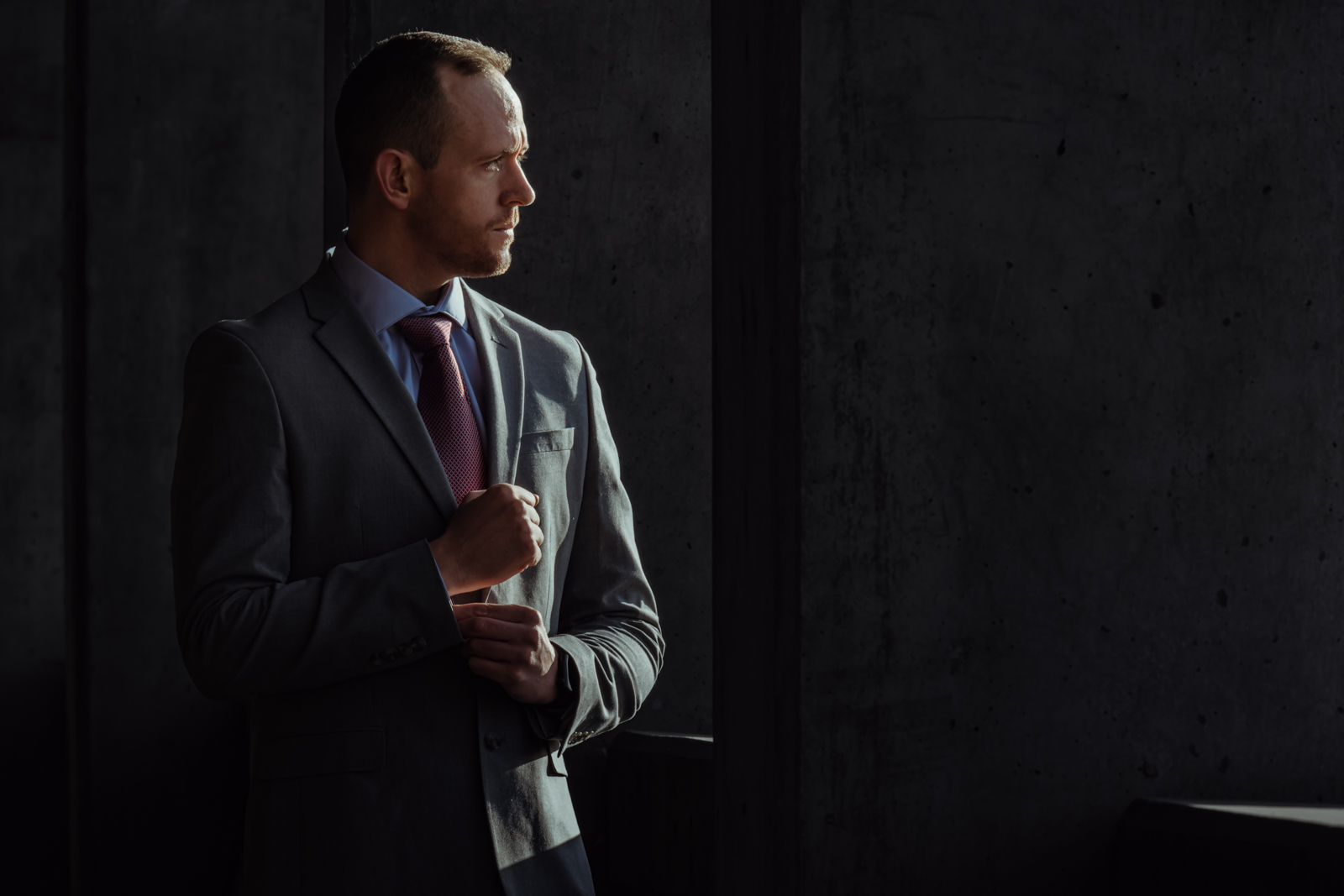
A real session is built on decisions a phone can’t make for you, and won’t try to. Lighting is shaped on purpose. A key light, a fill, and background separation control shadow the way a window or an overhead fixture never will. Framing gets decided based on where the image will actually live, tight for a small app icon, wider for a website hero. Color grading gets matched to your actual brand palette instead of a phone’s half-second white balance guess. Retouching stays subtle enough that you still look like you on a decent day. Not a version of you that’s been through a car wash.
None of that is vanity. It’s someone finally making the decisions on purpose, with your brand in mind, instead of letting a phone chip make them automatically.
One Photo Ends Up Everywhere, Whether You Planned for That or Not
People budget for a headshot thinking about LinkedIn and stop there. In practice, one session produces the image that shows up on your website’s About page, in a press mention you didn’t get to preview, on a conference speaker page, in your email signature, and on your Google Business Profile. All of it pulling from whatever’s on file the moment someone needs it.
A widely cited photo-perception study found professional headshots made subjects look 76 percent more competent, 62 percent more influential, and 9 percent more likable. Than casual or amateur photos of the same people. That shift happens in under a second, before anyone reads your bio or a single word of your website copy. One image, reused across a dozen places you don’t control the timing of, is either quietly working for you every time it loads, or quietly working against you. There’s no neutral setting on a photo that shows up that often.
What Actually Makes This Worth the Money
Hiring well matters more than most people budget time for. Look at a photographer’s actual headshot portfolio, not their wedding gallery or their landscape work. Those tell you nothing about how someone lights a face. Ask how many outfit changes are included. Confirm exactly how many final retouched images you’re getting. Ask whether you own full usage rights, and what the turnaround looks like if you’re working toward a deadline.
Preparation matters just as much. Bring two or three solid-color outfits instead of patterns, since a busy pattern competes with your face in a tight crop. Get a haircut a few days ahead, not the morning of, so it has time to settle instead of looking freshly done. Show up having slept. A photographer can guide your expression and your posture once you’re in the chair. They can’t undo three hours of sleep and a shirt with a spaghetti sauce ghost on it (you know the one).
Run the actual math instead of the vague version. It’s a fixed cost, paid once, for images most people keep in active use for two or three years. Spread that cost across every login, every bio, every deck, and every press mention. The real cost per use lands well under what people assume before they ask for a quote. Compare that to the alternative. The new website, the new logo, and the polished pitch deck all point back to one photo nobody planned for. Quietly undercutting everything built around it.
The hesitation almost never comes from the money. It comes from being the subject of the camera instead of standing safely behind it, and that discomfort is normal enough that a decent photographer spends the first few minutes of a session working through it before a single usable frame gets taken. You don’t need to already feel confident in front of a camera. That’s the actual job of the session, not a prerequisite for booking one.
I shoot professional headshots and brand photography as part of a broader commercial photography practice. Tell me what you’re planning and I’ll tell you what a session should actually look like for it. Just don’t send me the Zoom screenshot as a reference for what you’re going for.