Colorado Springs has one of the highest concentrations of aerospace and defense activity in the country. NORAD and the Cheyenne Mountain Complex are here. U.S. Space Command is headquartered at Peterson Space Force Base. Schriever Space Force Base and the Air Force Academy are both a short drive from downtown. Lockheed Martin, Northrop Grumman, Boeing, L3Harris, and a long list of smaller contractors and subcontractors all have a real presence in this city, not a satellite office that shows up once a year.
Most of those companies still buy photography the same way a dentist’s office does: whoever’s cheapest, whenever someone finally notices the website photos are eight years old. That’s a mismatch. A contractor pitching a nine-figure proposal is making a worse first impression with its imagery than a local coffee shop with a decent Instagram account. I want to walk through what this niche actually needs from a photographer, because it’s different from a normal commercial shoot in ways that matter before anyone ever picks up a camera.
Security Comes Before Composition
On a normal commercial shoot, the biggest logistical question is parking. On a defense contractor’s facility, it’s badging, escorts, and what’s allowed in frame. Every base and most contractor facilities have their own visitor and photography policies, and they are not optional or negotiable on shoot day. A photographer who shows up expecting to wander and find good light is going to have a very short, very awkward visit.
The real work happens before the shoot (I wrote a full walkthrough of this planning process here): confirming who needs to submit what paperwork, how far in advance, whether an escort is required at all times, whether certain equipment (drones, in particular) is a hard no, and which backgrounds, screens, whiteboards, or hardware are off-limits in a frame regardless of how good the shot looks. None of this is legal advice, and I’m not the person who tells a client what they’re allowed to show. That’s their security office’s call, always. My job is knowing the right questions to ask early enough that the actual shoot day is boring in the best way: everyone already knows what’s happening, and nobody is improvising in front of a badge checkpoint.
What the Images Actually Need to Do
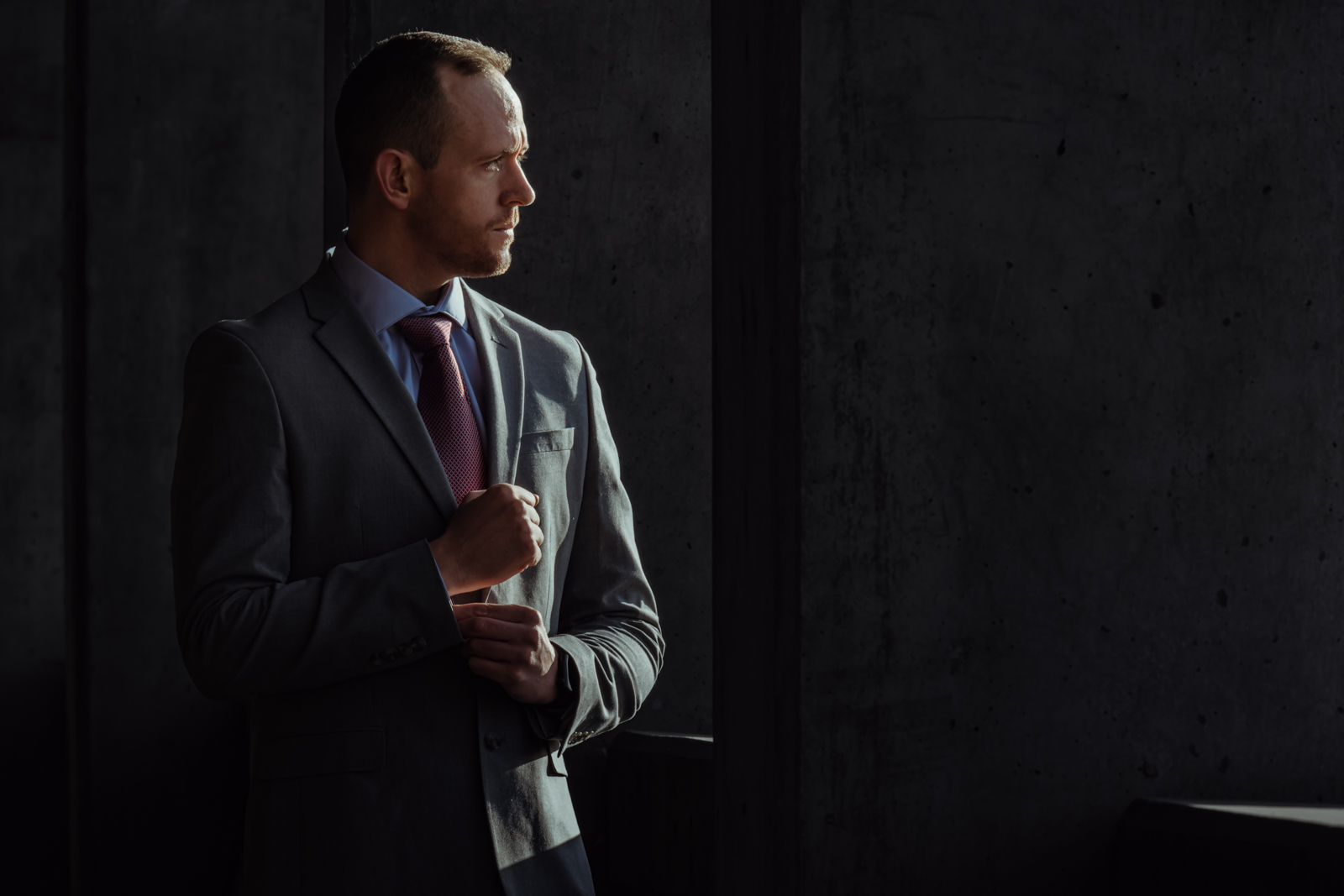
Defense and aerospace marketing has a specific credibility problem: the audience reviewing a proposal or a capabilities deck is often a program manager or a contracting officer who has seen a hundred generic stock photos of “engineers pointing at a screen.” That imagery reads as filler, and filler undermines the parts of the proposal that actually matter. The photography that works here shows real capability. A technician actually doing the calibration, not posing near it. A cleanroom that looks like a cleanroom, not a hallway with better lighting. Leadership portraits that look like the person actually runs something, not like they borrowed a conference room for twenty minutes.
That’s a different brief than a product launch or a lifestyle brand shoot. There’s less room for stylization and more premium on looking exactly as credible and precise as the work itself. Overproduced imagery in this space reads as compensating for something. The best version is clean, well-lit, technically correct, and gets out of its own way.
Why Being Local Actually Matters Here
A national photography agency can fly someone in for a shoot in this space. What they can’t easily replicate is a photographer who already understands badge timelines, already knows which facilities have on-site escorts versus which require advance clearance lists, and isn’t learning the vocabulary of the industry for the first time on-site. Being based in Colorado Springs means I’m not pricing in a flight and a hotel for a half-day shoot, and I’m not the person asking a program manager to explain what a SCIF is in the middle of a pre-shoot call.
If your company operates in this space and your visual presence hasn’t kept pace with the technical quality of what you actually build, that gap is worth closing before it costs you a proposal. Reach out and we can talk through what a compliant, credible shoot actually looks like for your facility.