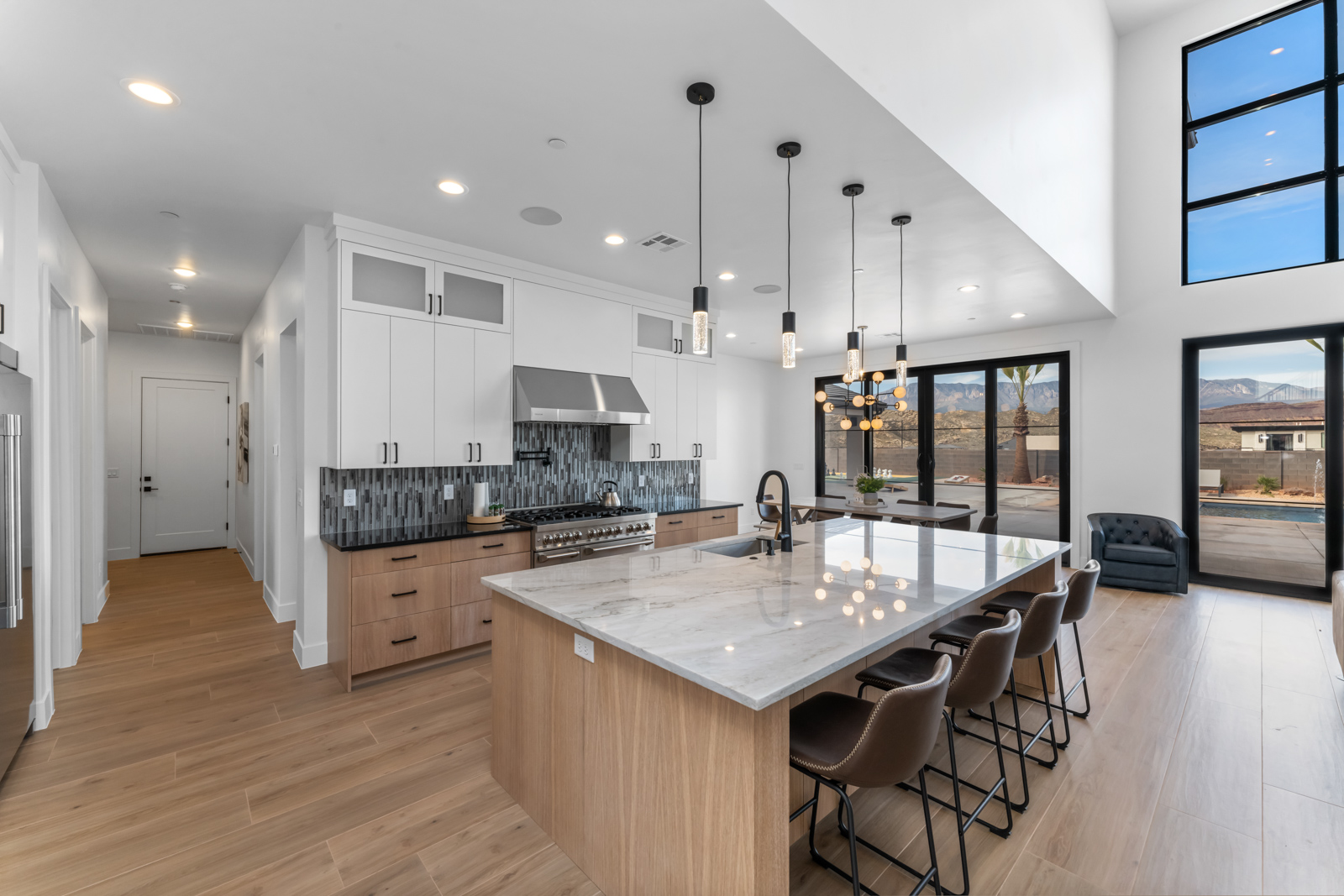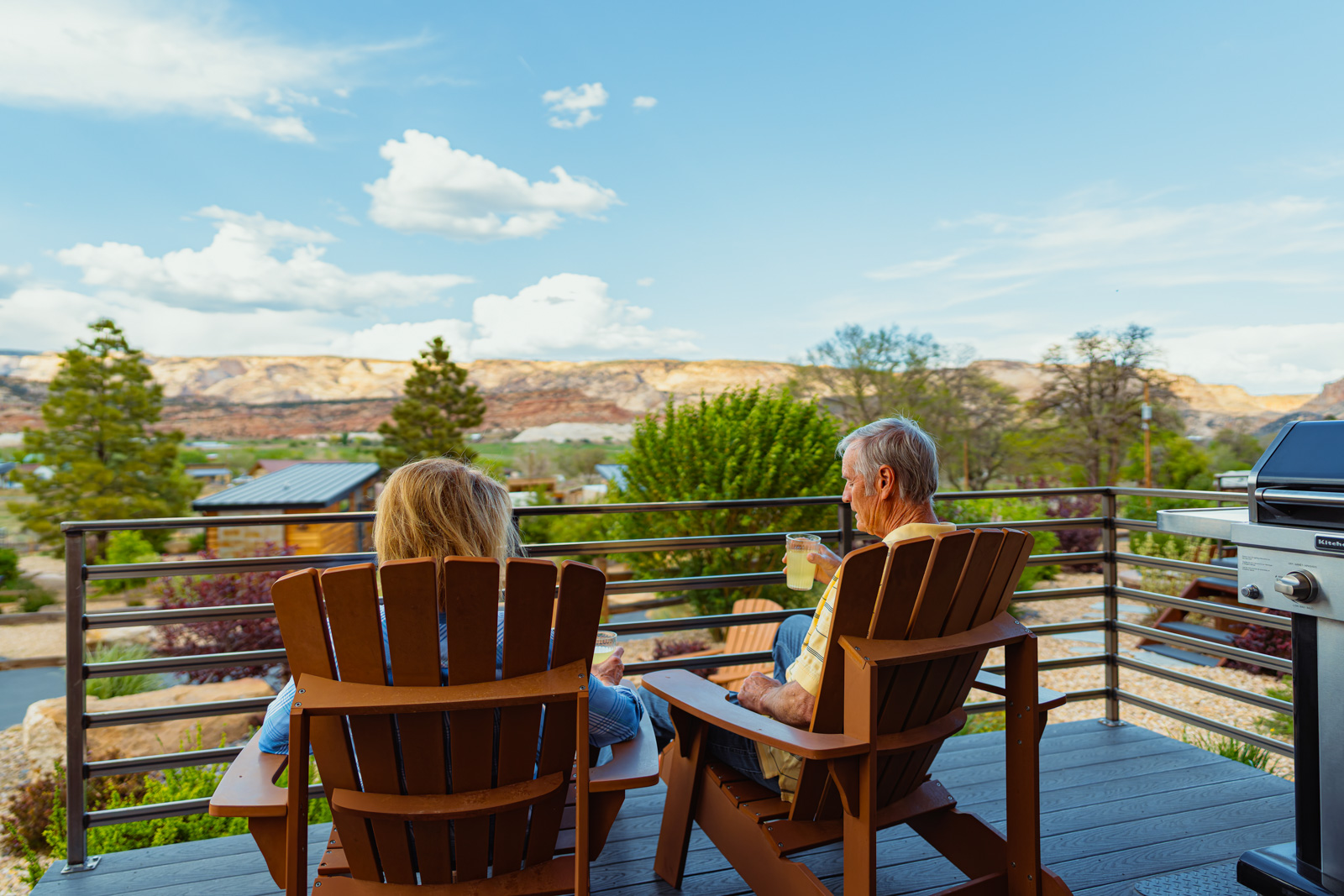

Go look at the brand photography on any three restaurant websites in your city. Two of them will have the same photos. Empty dining room with the chairs perfectly pushed in. Close-up of a plated dish that could be any restaurant’s plated dish. Exterior shot at golden hour with nobody in frame. The photos are well-lit, properly composed, and completely interchangeable with any other restaurant in the same price range.
Now look at the restaurant that’s full every weekend. Their photos show a bartender mid-pour with the dining room alive behind them. A table of four laughing over shared plates. A server carrying something that’s clearly the thing you’re supposed to order. The quality isn’t necessarily better. The photos are just doing a different job. The first set documents a space. The second set markets an experience.
That gap is the difference between brand photography that exists and brand photography that works. Most business owners can see it when they compare two restaurants side by side. Fewer recognize the same pattern on their own website. And that’s the real problem. It’s easy to evaluate someone else’s visual presence. It’s much harder to see your own photos the way a potential customer sees them for the first time.
The Pattern Behind Brand Photography That Actually Works
Every effective brand photography example shares the same underlying characteristic: it answers a specific question the viewer is asking before they realize they’re asking it.
When someone lands on your website, scrolls your Instagram, or clicks your Google listing, they’re running a rapid evaluation. Does this business look legitimate? Does it look like the kind of place I’d spend money? Do the people behind it seem competent? Is this what I expected based on what I’ve heard?
Your brand photography either answers those questions convincingly or it doesn’t. And the answer has nothing to do with whether the photos are “high quality” in a technical sense. I’ve seen businesses with gorgeous photography that communicates nothing specific about who they are. And I’ve seen businesses with straightforward photography that builds trust in seconds because every image is doing a clear job.
The brand photography examples that work as marketing tools share three patterns. They show specific people doing specific things rather than posed portraits against blank walls. They include environmental context that tells the viewer something about the business they couldn’t learn from the logo alone. And they maintain visual consistency across the entire set, so the viewer’s brain registers one business, not a collage of disconnected images.
These patterns sound simple. Most businesses violate all three.
What Fills Space Versus What Fills a Pipeline
The best way to spot the difference is to look at specific categories of brand photography and compare what the generic version looks like versus what the effective version looks like.
Working portraits are the most common brand photography investment. The generic version is a headshot against a solid background. The effective version shows you at work in the environment where you actually do the work. A financial advisor reviewing documents at a real desk, not posing in front of a bookcase. A contractor on a job site, not standing in front of a truck. The difference matters because the generic version says “this person exists.” The effective version says “this person does this specific thing in this specific context, and they look like they know what they’re doing.”
Process photography is where most brand photography packages fall short entirely. Very few businesses photograph how they work. But process images are some of the highest-performing content across social media and websites because they prove capability instead of just claiming it. A bakery showing dough being shaped at 4 AM communicates more about quality than any hero shot of the finished croissant. A manufacturing company showing the actual production floor communicates more about capacity than a stock photo of someone in a hard hat pointing at a clipboard.
Workspace photography gets overlooked because business owners assume their space isn’t interesting enough to photograph. But your workspace answers one of the most important questions a potential customer has: “Is this a real business?” Your Google Business Profile, your website’s about page, and your social media all need images of where you work. Not because the space is impressive, but because showing it proves you exist in a physical reality and not just as a logo on the internet.
Detail and product shots serve a different function. They fill the visual gaps between hero images. Close-ups of materials, tools, packaging, signage, and finished work give you visual variety for social media and service pages without repeating the same five images for six months. These are the images that keep your content feed from looking thin.
And then there’s the category that separates memorable brand photography from forgettable brand photography: images that show what makes you different from the business down the street. Not what makes you look professional. What makes you look like you.
Every brewery in America has photos of copper kettles and hop cones. Every consulting firm has glass-conference-room shots. Every yoga studio has someone in warrior pose against a white wall. Those images are competent and completely interchangeable. The brand photography examples that actually do marketing work are the ones that couldn’t belong to anyone else. They photograph the specific thing, the specific people, the specific environment that makes this business distinct.
(Most brand photography packages deliver “professional.” Very few deliver “distinctive.” If someone could swap your images with a competitor’s and nobody would notice, the photography isn’t doing its job.)
How to Evaluate Whether Your Brand Photography Is Working
You don’t need a marketing degree to assess this. You need ten minutes and an honest eye.
Pull up your website on your phone. Scroll through the pages a potential customer would visit before contacting you. For each image, ask one question: what is this photo telling the viewer that they couldn’t learn from the text alone? If the answer is “nothing, it’s just filling space next to the paragraph,” that image isn’t doing marketing work. It’s decoration. And it’s expensive decoration, because research shows people form credibility judgments about your website in roughly 50 milliseconds, with nearly half of that judgment based on visual design alone. Every decorative image is a missed opportunity to build trust in the moment that matters most.
Now do the same with your social media. Look at the last 20 posts. How many of the images are genuinely specific to your business versus generic enough to be used by any company in your industry? The ratio tells you how much brand recognition you’re building versus how much visual noise you’re adding. Consistent visual presentation across channels can increase revenue by up to 33%. That number isn’t about having pretty photos. It’s about having recognizable photos that train your audience to remember you.
The test that matters most is the competitor comparison. Open your website and a competitor’s website side by side. If you swapped the photography between the two sites, would anyone notice? If the answer is no, your brand photography examples aren’t doing their job regardless of how professional they look.
Business owners who do this exercise usually discover something uncomfortable. Their website photography is technically fine. The lighting is good. The composition is clean. And every image could belong to any of five competitors because nobody planned the photography around what makes this particular business worth choosing.
The Photography That Works Hardest Is the Photography You Planned
The common thread across every brand photography example that quietly does marketing work is that someone thought about what the images needed to accomplish before the camera came out. Not what would look good. Not what the photographer suggested. What the marketing needed.
That planning is the difference between spending $2,000 on a brand photoshoot and getting images that run your marketing for 18 months versus spending $2,000 and getting a folder of nice photos that you use four of and then go back to stock images because the rest don’t fit anywhere. The investment is the same. The return depends entirely on whether someone connected the shot list to the marketing plan before the first frame was captured.
If your current brand photography could belong to anyone, it’s serving everyone except you. Contact me if you want to talk about what images would actually work for your specific business.